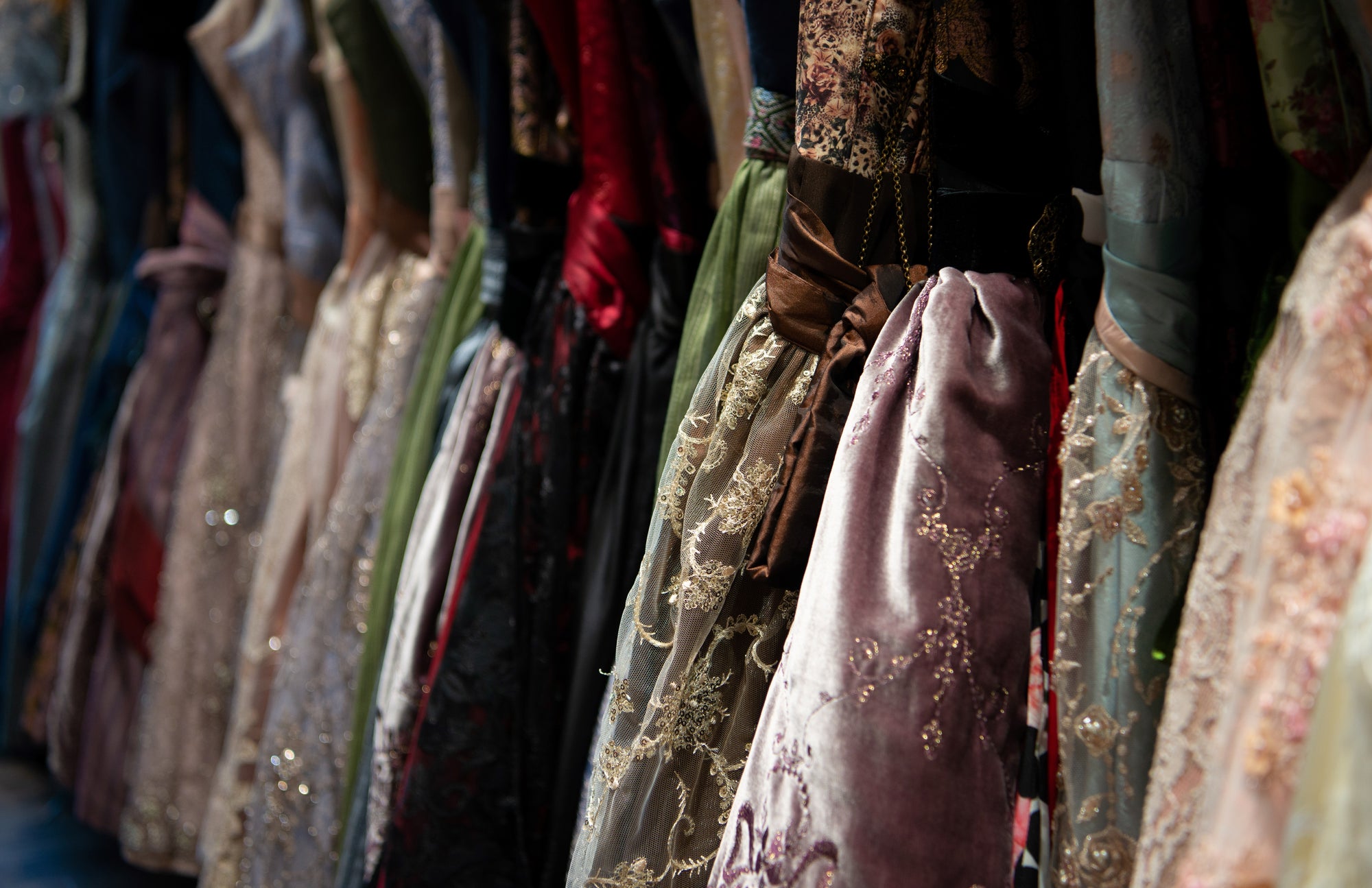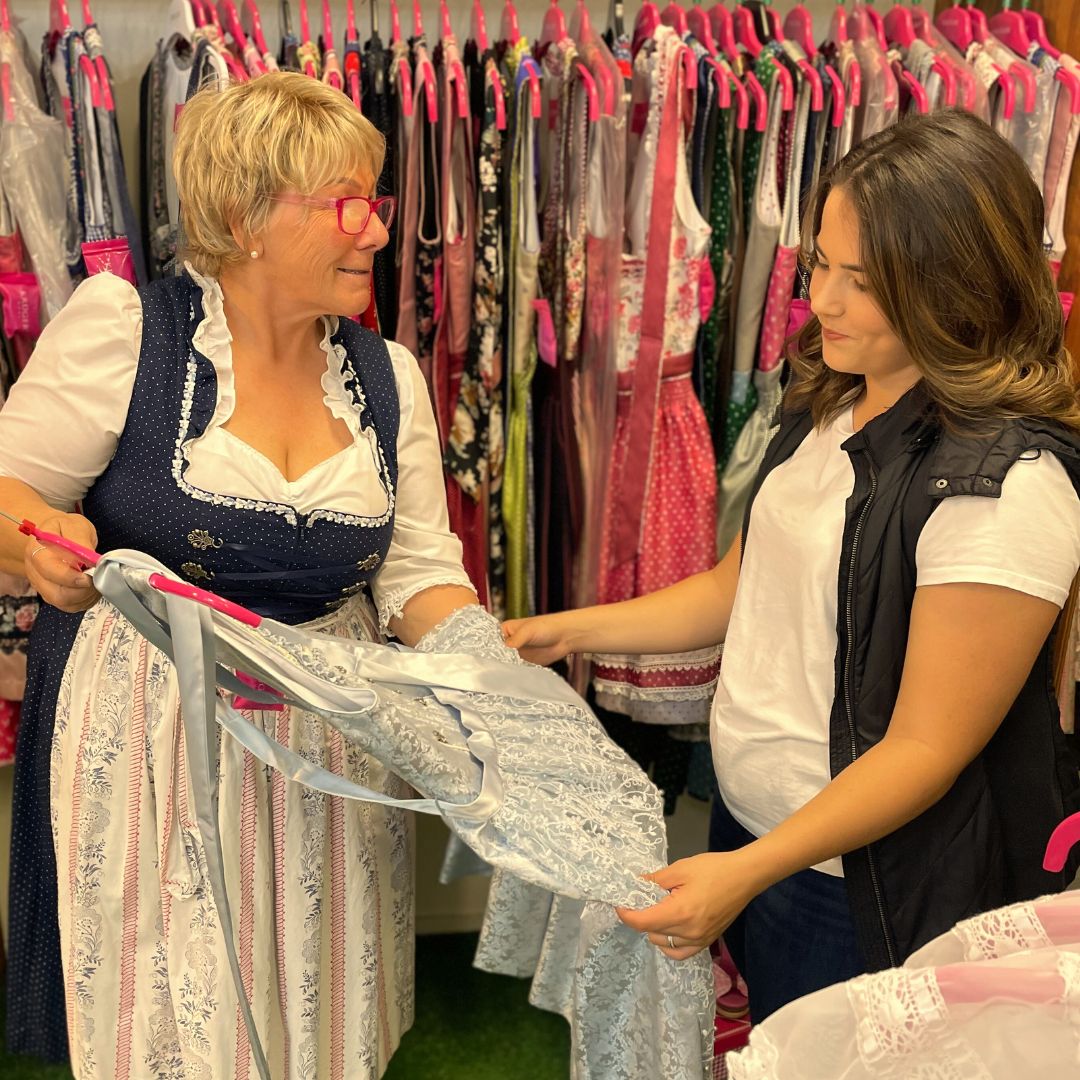

Dirndls are iconic - and for very good reason. They celebrate the figure, carry centuries of Bavarian tradition, and make every woman who wears one feel genuinely spectacular. But for all their magic, dirndls can also come with a lot of questions - especially if you're new to Tracht.
We've answered the most common ones below, so you can walk into your next Oktoberfest (or any occasion, really) feeling confident and ready.
#1 Can any woman wear a dirndl?
As Vivienne Westwood once put it: "If women wore more dirndls, there would be no more ugliness." And she was absolutely right.
A well-fitted dirndl flatters every figure - whether you're curvy, petite, broad-shouldered, or anything in between. The cut is designed to create a beautiful silhouette for every body shape. The key is fit: a dirndl that sits properly will do wonderful things for your figure. One that doesn't, won't - so getting the fit right is everything.

#2 Which dirndl colour suits me? What about blonde hair?
Choosing the right colour isn't just about your hair - it's about your overall colouring, what stylists call your "colour type."
- Spring types (warm, light colouring) look radiant in bright, fresh, youthful shades
- Summer types (cool, soft colouring) shine in sky blue or lilac.
- Autumn types (warm, rich colouring) are best suited to olive green and deep burgundy.
- Winter types (cool, high contrast colouring) look stunning in vivid magenta or cornflower blue.
So rather than picking a colour purely based on hair colour, think about your whole palette - skin tone, eye colour, and whether your natural colouring is warm or cool.
#3 What do I wear with a dirndl when it's cold?
A dirndl blouse with longer sleeves is your best friend here - especially one with a higher neckline and lace detailing. It looks elegant and keeps you warm. Layer it with a Trachten jacket (Janker) in loden wool or a knitted cardigan, and you've got a complete cold-weather Tracht outfit that still looks the part.
#4 How do you style a dirndl?
Are you going for the classic look, the romantic look, or something more modern? The beauty of the dirndl is that it can be styled each way - and fashion is always a playground.
What matters most is quality: invest in good materials and well-made pieces, and they'll reward you every time you wear them. The details - your blouse, your apron, your accessories - are where your personality comes through.
#5 What does the colour of a dirndl say?
Authentic traditional Tracht doesn't have strict colour rules - in fact, many regions have their own distinctive colour palettes that signal a sense of belonging to that community. That regional identity is part of what makes traditional dress so meaningful.
Beyond that, colours carry associations we all instinctively feel:
💚 Green - freshness, a connection to nature, warmth
💙 Blue - youthfulness, lightness, vitality
❤️ Red - passion, boldness - and it always commands attention
🖤 Black - elegance, mystery, sophistication; particularly striking on darker skin tones, and sensational when paired with red accents

#6 What shoes do women wear with a dirndl?
Trachten pumps with ankle straps are the classic choice - they provide great support, look elegant, and the block heel keeps them comfortable through a long evening. For a more dressed-up look, black or nude heels work beautifully, dusty pink or navy blue. Ankle boots are also a great when wearing a dirndl.
Secret tip: look for a style with a small platform under the front of the shoe. The platform helps cushion the ball of the foot, reduces the angle of the heel, and makes the shoe much more comfortable to wear for longer periods.


If you love the look of heels but prefer a little more comfort, Kitten Heels are a wonderful choice. With their low heel, closed toe and often open-back slingback design, they offer a polished look without the height of a traditional pump.
Sitting somewhere between a flat and a high heel, kitten heels pair beautifully with a Dirndl and are perfect for long days at Oktoberfest, weddings and special occasions.


Ballerina flats are a timeless choice with a Dirndl, offering both comfort and style. Look for elegant details such as a small bow, delicate buckle or subtle embellishment at the front to add a feminine touch. Comfortable enough to wear all day, yet beautifully refined, ballerina flats complement a Dirndl perfectly and are ideal for Oktoberfest, weddings and special occasions alike.


Sneakers are also increasingly popular, especially among younger wearers - and honestly, they work.
One practical tip: dirndl nights tend to run long. Prioritise a comfortable footbed - your future self will thank you.
#7 What do you wear under a dirndl?
The essentials are: a dirndl bra, underpants, a petticoat (underskirt), and hosiery - either skin-toned stockings or traditional Trachten knee-highs.
Of all these, the bra deserves the most attention. A proper dirndl bra (3/4 cup cut) is cut differently from an everyday bra - the cup shape, the lift, and the neckline are all designed to create that beautiful décolletage the dirndl bodice is made for. It makes a genuinely noticeable difference.
#8 What colour bra under a dirndl?
White is the most common choice - it pairs perfectly with the typical white dirndl blouse. Cream is a great alternative if you prefer something a touch softer. If you're wearing a black blouse, go with a black bra.
#9 Which bra is least visible under clothing?
A balconette bra is the go-to here. Its straight-across cups and wider-set straps sit lower on the chest and further apart on the shoulders, making it far less visible under the bodice neckline - and it gives beautiful lift from underneath.
Here's a surprising tip: red underwear is actually one of the least visible options under white fabric. The closer the red matches your natural skin tone, the less it shows. Lighter skin tones suit nude, blush, or peach; deeper skin tones are better served by deeper reds like burgundy.
#10 What underwear goes under a dirndl?
Skip the everyday bra - you want something that genuinely supports the structure of the dirndl bodice and enhances your décolletage. A properly shaping dirndl bra, good underpants, a petticoat for volume, and stockings complete the picture underneath.
#11 What colour stockings with a dirndl?
Traditionally, dirndls were worn with hand-knitted white stockings held up with garters - and it's a beautiful look if you want to go full traditional. For most modern wearers, skin-toned stockings are the contemporary choice and work with virtually any dirndl.
#12 How fitted should a dirndl be?
The bodice (Mieder) should fit noticeably more snugly than everyday clothing - that's part of how it works its magic on your silhouette. But there's a balance: too tight, and it will pull across the back creating horizontal creases. Too loose, and the bust won't be supported and the whole thing will look shapeless.
The sweet spot is a firm, supportive fit where you can still breathe comfortably and move freely.
#13 Which jacket goes with a dirndl?
For the classic Oktoberfest look, a traditional Trachten Janker in loden wool or a knitted cardigan is ideal. A simple, solid-coloured jacket in a muted tone that complements your dirndl style will rarely go wrong.
For a bit of personality, add a beautiful brooch, some subtle embroidery, or a fun decorative pin - the Germans call it a Gaudiknopf, and they're a lovely traditional touch.

#14 What hairstyle goes with a dirndl?
This is delightfully personal, but a chignon or a simple updo is always a safe and elegant choice. The idea is to let the dirndl be the star - and with an updo, it absolutely is.
Fresh flowers tucked into your hair are a quick and beautiful finishing touch that completes the Tracht look perfectly.
#15 What nail polish goes with a dirndl?
If you like to coordinate, a nail colour that picks up a shade from your dirndl is a lovely detail. Soft, understated shades tend to work best - the dirndl is doing the talking, so the nails don't need to compete.
Less is definitely more here.
#16 What jewellery goes with a dirndl?
Trachten jewellery is always a wonderful choice - fine pieces that are built to last and carry their own stories. A beautiful Kropfkette (traditional choker necklace, typically silver with freshwater pearls) is a classic - elegant, timeless, and deeply traditional.
Beyond that, the rules are generous: sapphires, diamonds, and white gold for a dressed-up look; colourful gemstone bracelets with a cotton dirndl for something more casual; even playful little bee earrings or bright enamel pieces if you want to have fun with it. Choose pieces you love - that's always the right answer.
 #17 What dirndl length suits me?
This depends on your height, the occasion, and your personal style:
· Mini dirndl (50-60cm skirt length) - shows the most leg; great if you love shorter skirts
· Knee-length / midi - the most universally flattering length; suits almost everyone
· Midi to mid-calf - the classic, everyday length
· Ankle or floor-length - reserved for formal or festive occasions
When in doubt, midi is your friend.
#18 What does a black dirndl mean?
Black dirndls carry an air of elegance, mystery, and quiet confidence. Some regional traditional dress uses black as a primary colour - the Bregenzerwald Juppe from western Austria is a famous example.
Women with darker skin tones and dark hair look particularly stunning in black dirndls - the contrast is striking. Paired with red accents, a black dirndl becomes something truly special.
#19 What size should you buy a dirndl in?
A well-fitted dirndl should have a bodice that sits firmly and supportively - snugger than your regular clothing size would suggest. The bodice creates the silhouette, so it needs to do its job. If you're between sizes, the best approach is to try both and see which gives you the fit (not just the feel) you're after.
#20 What do you wear if you don't have Tracht?
If the occasion calls for Tracht - like a Trachten wedding or an Oktoberfest celebration - it's worth making the effort. A second-hand dirndl is a perfectly wonderful option and often a great find.
If you genuinely can't source Tracht, feminine alternatives in a similar spirit work well: think frilly blouses with puffed sleeves, gathered details or broderie anglaise, A-line or pleated skirts, and traditional checks or florals. The idea is to dress in the celebratory spirit of the occasion.
#21 What do you wear if you don't like dirndls?
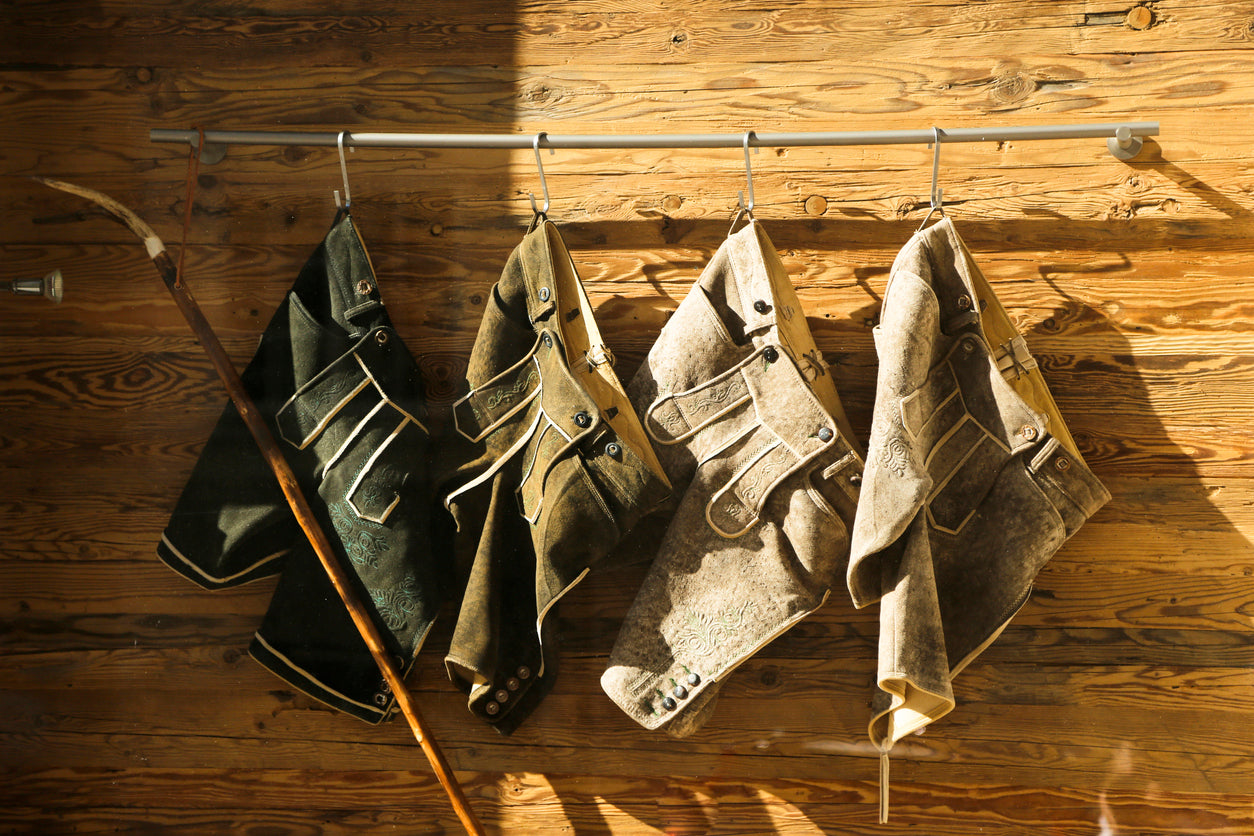
That's completely fine - Tracht is more than just dirndls. A traditional Trachten skirt (or a denim or leather skirt) with a pretty blouse and some thoughtful accessories can look fantastic and still feel true to the culture. Lederhosen and leather shorts are equally brilliant options and just as authentically Tracht.

#22 Can everyone wear a dirndl?
Yes - and we mean that. A well-fitted dirndl suits virtually every woman, regardless of size or shape. The cut is genuinely designed to flatter a range of figures. Whether you have a fuller bust, a smaller bust, a curvier figure or a straighter one, the right dirndl for your proportions exists - and it will look beautiful.
Fit is the variable that matters, not size.
#23 What should you look for when buying a dirndl?
First and most importantly: you should feel wonderful in it. Beyond that:
· The bodice must fit firmly but allow you to breathe and move freely
· The bodice should lie flat with no pulling or creasing
· The skirt length should suit your height and the occasion
· The fabric and construction should feel like quality - a good dirndl is an investment that lasts
#24 What dirndl length is best for shorter women?
Shorter women are best served by a shorter dirndl - what might be a mini on a taller frame can become a flattering midi on a petite one. If you're unsure, midi length is always a safe and universally flattering choice for every height.
#25 How long should a dirndl be?
The classic dirndl is midi-length - sitting around the knee. But the "right" length is really about your body, your proportions, and the occasion. Festive dirndls are often cut to the calf or even the floor. Mini dirndls are fun and playful for more casual occasions. There's no single answer - which is the beauty of it.
#26 What are the best dirndl brands?
There are many wonderful traditional Tracht designers and makers - from established Austrian and Bavarian houses to independent designers producing beautifully crafted pieces. If you're looking for authentic, hand-selected Tracht brought all the way to Australia, Mama Schnucki travels to the world's largest traditional clothing fair in Munich and Salzburg every year specifically to find the best of the season. Every piece at Schnucki has been personally chosen - so you know it's the real thing.